
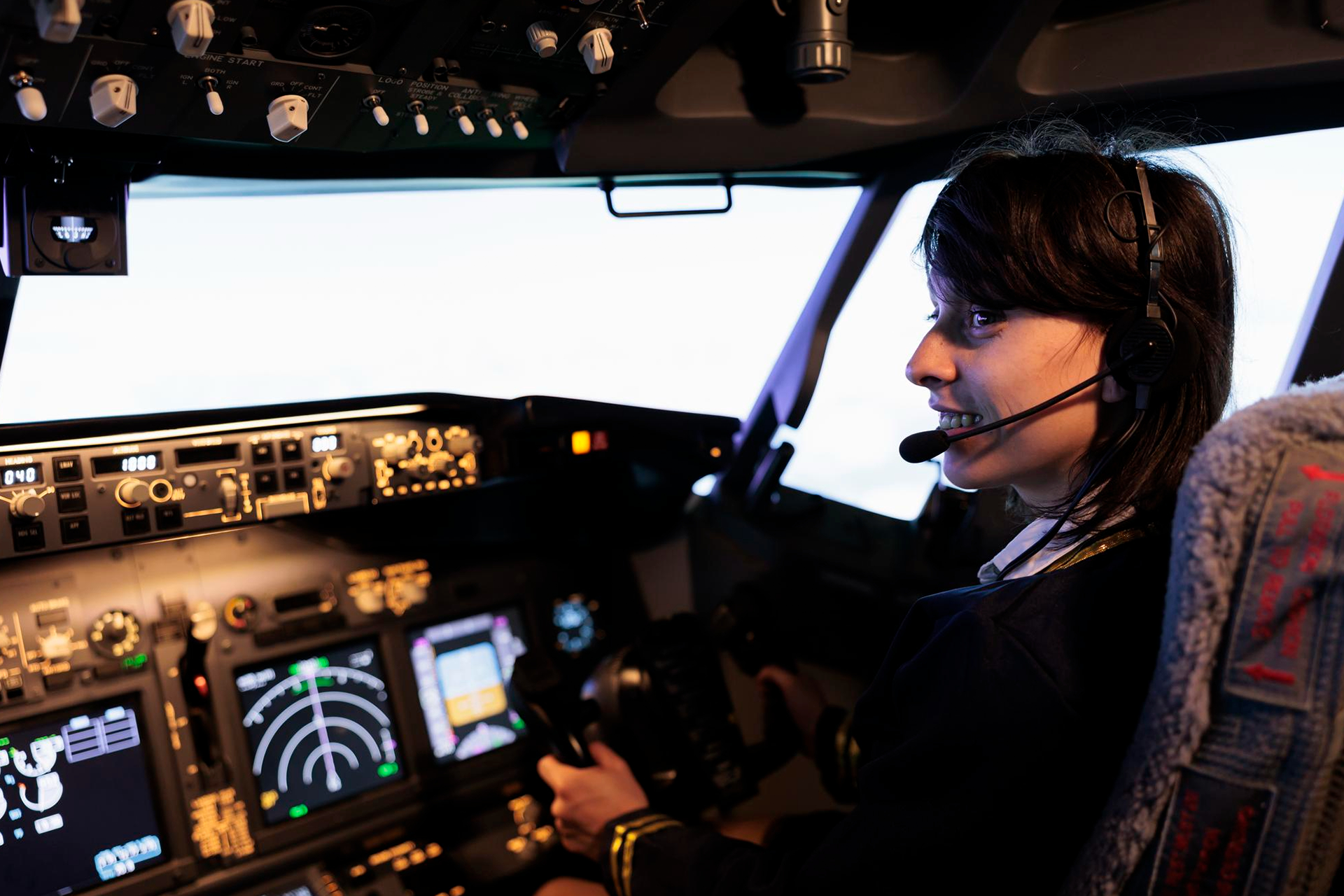
For many of us flying an aircraft is our childhood dream but when it comes to the pilot profession, it is much more than that. It is a combination of responsibility, passion and developing a skill set that demands years of hard work and rigorous training. To ensure safety of passengers in the skies, pilots must hone their practical skills, the technical know-how and the quick decision making skills. Although real flight experience is important, a flight simulator is one of the most advanced tools available for modern pilot training.
Simulator training is transforming pilot education. The current blog explores how simulator training for pilots helps them boost confidence and enhance skills and at the same time prepares them for real-world flying experience. Further, it also helps to understand DGCA simulator training benchmarks for pilot licensing exam preparation in India.
What is Simulator Training for Pilots?
Before knowing about simulator training for pilots, it is important to know what a simulator actually is. You can understand it like this. These are advanced machines that replicate the real flight environment, behaviour of an aircraft and how the cockpit controls. These machines mimic minute aspects of flying such as effective communication with ATC, weather variations and turbulence, and arising of emergency situations like engine failure or aircraft system malfunctioning.
The most important benefit of simulator training is that budding pilots can learn about the technical aspects of flying in a risk-free learning environment. If pilots learn through real flights, a small mistake can risk their life and the aircraft. Thus, this kind of training helps them to perfect their flying skills by learning and experimenting.
Why Simulator Training is Crucial
1. Safety Comes First
Flying is adventurous but at the same time it is risky and trainee pilots cannot afford errors in real aircraft. Thus, with simulator training, it becomes significantly easier to understand unexpected situations, complex maneuvers and emergency protocols in safe surroundings with the fear of any mishap.
For example, during takeoff in a simulator, a situation like engine failure might occur. Thus, the trainee pilot can learn how to respond promptly. This can help in future if the pilot is faced with a similar situation and can reduce the risk of fatality.
2. Cost-Effective Learning
When it comes to training in real aircrafts, the flight hours could be expensive as they involve operational costs, fuel price and the maintenance charges. Thus, in a simulator, pilots can practice for hours but at a fraction of cost and that too without affecting the training quality.
3. Repetition Builds Mastery
Unlike training of real aircraft, pilot simulator training helps the pilots to strengthen their flying skills by repeating the same exercise several times. This enhances confidence while flying actual aircraft because their reaction time to respond to situations gets improved.
4. Handling Complex Scenarios
In real life, a number of dangerous scenarios can arise including emergency landing, bad weather conditions, system failure, malfunctioning of engine and other instruments. When pilots repeatedly practice on simulators, they develop the critical thinking abilities and decision making skills that are essential to handle these life threatening situations.

Flight Simulator Training Benefits
Simulator training offers numerous advantages beyond basic skill-building:
1. Mastering the Cockpit
Simulators help the pilots to learn minute facts and details about the inside of the cockpit including switches, dials and the use of different intstruments. Training on a simulator significantly reduces the risk of errors during the initial flights.
2. Emergency Preparedness
During the flight, sometimes rare but critical scenarios might arise.Thus, simulators allow pilots to manage various scenarios safely such as mid-air navigation errors, weather issues / turbulence, failure of engine during takeoff or mid-flight, and system faults like electrical failures. Ample practice helps pilots to stay calm and respond correctly in real flights in emergency situations.
3. Navigation and Communication Skills
Accurate navigation and effective communication with ATC (Air Traffic Control) are considered crucial aviation skills for pilots. Simulators allow pilots to develop precision, clarity and confidence in actual communication in following ways –
- Follow complex flight routes
- Communicate using standard aviation protocols
- Handle unexpected airspace instructions
4. Stress Reduction and Confidence
As much as the flying activity is exciting, it also brings some level of stress especially for a new pilot. Thus, with the help of simulator sessions, trainee pilots can relax themselves as they gradually learn the cockpit controls, emergency handling of aircraft and the detailed flight process in a controlled and risk free environment.
5. Exam-Oriented Preparation
In DGCA simulator training, simulator training is considered an important step for future pilots as they can perform well during pilot licensing exam preparation with repeated practice sessions. Further, it makes sure they are ready to clear both the practice tests as well as the real-life flight scenarios.
How Simulator Training Fits into Licensing
For Pilot training programs such as Commercial Pilot License (CPL) and Airline Transport Pilot License (ATPL), simulator training is an essential part required for licensing:
- Pre-Solo Training
Trainee pilots are required to strengthen foundational skills before flying solo in a real aircraft. Basic flight controls and maneuvers can be learned in simulator training.
- Instrument Flight Training
In poor visibility, pilots are required to fly using instruments. These can be practiced well using simulators in accordance with IFR (Instrument Flight Rules) scenarios.
- Advanced Maneuvers and Emergency Handling
For passing licensing exams, pilots need to practice regularly advanced maneuvers and emergency responses. This exercise helps in gaining overall confidence which can be shown during actual flying.
- Practical Exam Preparation
Simulator assessments are a key component for many licensing examinations. Thus, pilots can do a lot better in exam conditions who have practised extensively in simulators. This is because it decreases the chance of mistakes and boosts overall confidence.
Real-Life Scenarios and Examples
Simulator training can benefit candidates in effectively handling the adverse real-world flying conditions such as:
- Engine Failure During Takeoff: For any pilot, it is a rare but dangerous situation. Simultator helps them to learn how to make quick immediate responses.
- Severe Weather Conditions: Low visibility occurs due to poor weather conditions like thunderstorms, fog and heavy rainfall. Pilots can practice flying in these conditions without risk.
- Instrument Malfunctions: Instruments like compass, altimeters or the entire navigation system might fail. Simulators help pilots to prepare mentally and perform flying considering the sudden emergency.
- ATC Communication Challenges: It is difficult to make right decisions under pressure but the simulator offers real instruction from air traffic control and thus, helps pilots to proceed accordingly.
Tips to Maximize Simulator Training
Pilots can make the most of Simulator Training by the below given useful tips:
- Practice Consistently – Each session makes you learn something new. Attend each session sincerely.
- Focus on Weak Areas – Do repeat practice of difficult maneuvers to gain confidence.
- Maintain Notes – Review your performance regularly and identify your mistakes and areas of improvement.
- Engage with Instructors – Feedback is the key. Ask your instructor about your immediate and previous performance so you can observe the difference.
- Simulate Exam Conditions – Time management is important. Exams can be cleared when practice is done under a given time frame and conditions.

The Future of Simulator Training
Simulator technology is advancing rapidly with new technologies coming up such as:
- VR Simulators – They are designed to provide a 3D cockpit experience to the candidate as they are actually sitting and flying the plane.
- AI-Based Feedback – The feedback is provided on the basis of real-time performance analysis and individual guidance provided to candidates.
- Networked Simulators – In this kind of set up, multiple trainees can join and interact in a shared virtual airspace.
- Motion-Based Simulators – These help in improving muscle memory by replicating the actual movements of an aircraft.
These innovations make pilot simulator training more effective than ever and help trainees bridge the gap between learning and actual flying.
Conclusion
Simulator training has completely transformed the way pilots are trained. Licensing exams can be effectively prepared as students can safely practice on simulators and gain the confidence and knowledge to handle emergency situations. Real world aviation challenges can be managed by mastering complex flight scenarios and control of the cockpit.
For aspiring pilots, real flight experience combined with simulator training develops the confidence and skills needed to become successful future pilots.
If you also want to become a professional pilot, PilotsPathway can help you in your journey with its dedicated mentorship, guidance, simulator – based training, useful resources and carefully tailored training programs.