
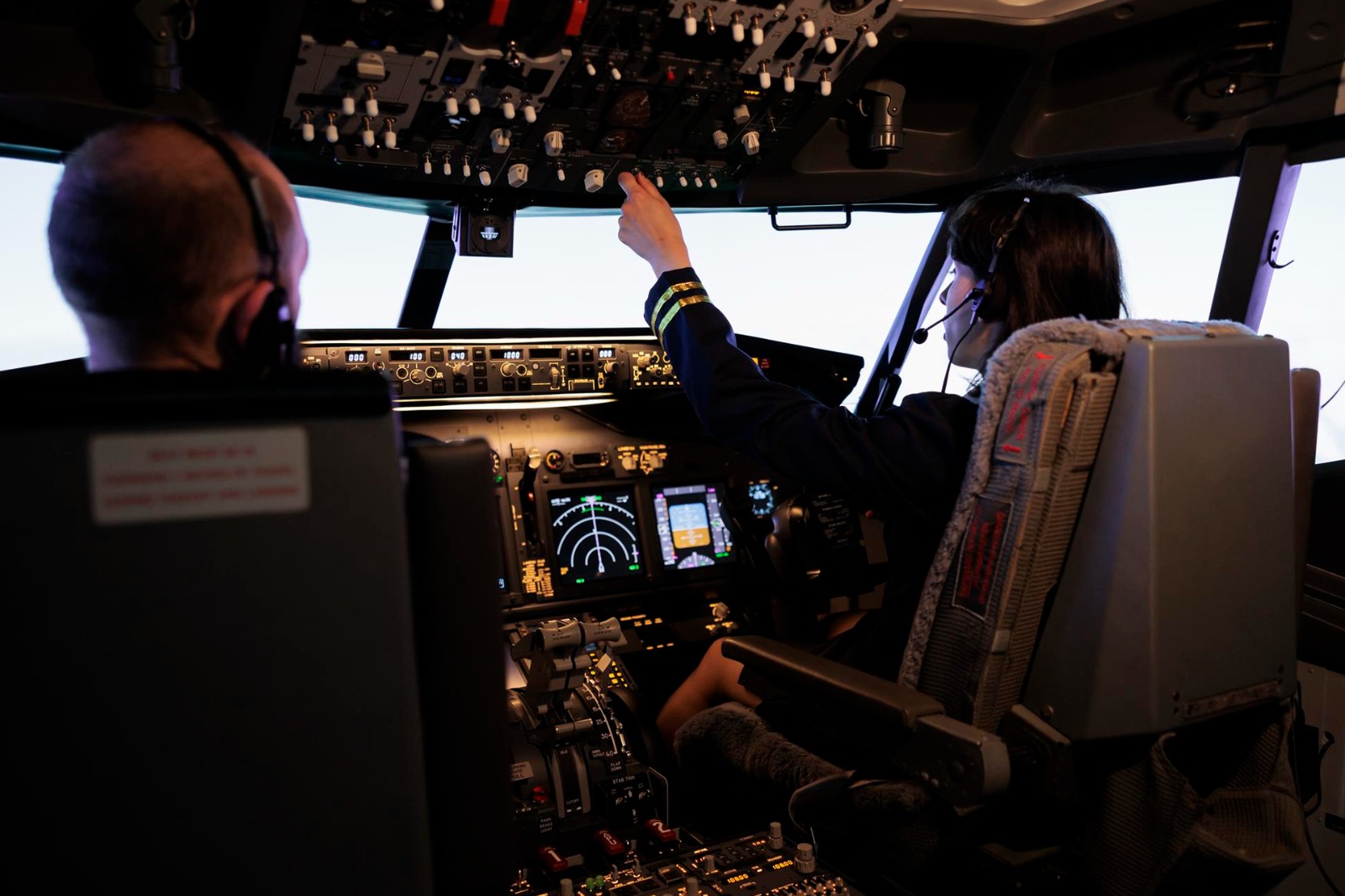
“I want to become a pilot” is a common answer in childhood, which many wish to fulfill today. But a question that came between the wish fulfillment is, “Do I want to fly professionally, or is it just my passion?”
This question makes the aspiring pilots differentiate between the Private Pilot License vs. Commercial Pilot License and make the right decision before proceeding. Both take different journeys; one takes on an adventure, and the other is a career-focused path.
So, if you are planning to start your pilot training, understanding the difference between PPL and CPL is crucial. You have ended up on the right blog, where you can explore both PPL and CPL closely.
Let’s get into the blog for complete details.
What is a Private Pilot License (PPL)?
A Private Pilot License (PPL) is the DGCA-approved certificate that allows individuals to fly for recreational purposes and operate non commercial aircrafts. PPL is not ideal for earning money, but a ticket to the skies for personal joy and adventure.
With a PPL, individuals can fly small aircraft, carries his or her friends or family on trips, and enjoy flying. Additionally, PPL can be considered as a foundation to get higher licenses like CPL. A PPL is about passion, not profession.
Key Points of PPL :
- Fly for personal & recreational purposes.
- Allows flying small private aircraft.
- You can carry passengers, but cannot earn money.
- Build flying experience.
- Fewer training hours compared to CPL.
What is a Commercial Pilot License (CPL)?
The Commercial Pilot License (CPL) is a certificate issued by the DGCA to an individual who can fly aircraft to earn money. With CPL, individuals can fly aircraft as a pilot in command or co-pilot for airlines, charter, or a cargo operator.
This license gives wings to individuals to build a career as a professional pilot and operate aircraft globally. Flying professionally with a CPL means great earnings, endless travel, and the ultimate satisfaction of getting paid for your passion.
Key Points of CPL:
- CPL gives power to individuals to work as professional pilots.
- A CPL holder can act as a Pilot In Command (PIC) or co-pilot in commercial flights.
- Eligible for jobs in airlines, charter services, and cargo flights.
- Chances to level up further with type ratings.
- Can apply for the ATPL in the future.
The major differences between CPL and PPL:
You have an individual explanation of CPL and PPL, which gives you an overview of both pilot licenses. But for a clearer understanding, a side-by-side Commercial Pilot License vs Private comparison will work best.
The comparison table of Private Pilot License vs. Commercial Pilot License is mentioned below:
|
Metrics |
Private Pilot License (PPL) |
Commercial Pilot License (CPL) |
|
Purpose |
For personal flying and recreation |
To build a career as a professional commercial pilot |
|
Required Age |
17 years |
18 years |
|
Flying Hours |
40 to 50 hours |
At least 200 hours or more |
|
Study Focus |
Basic subjects include navigation, weather, and communication |
Advanced subjects include advanced navigation, air regulation, and airline operations |
|
Operating Rights |
Can only operate small flights and is unpaid |
Can work as a PIC or co-pilot in commercial flights. |
|
Medical Requirements |
DGCA-approved Class 2 medical certificate |
DGCA-approved Class 1 medical certificate |
|
Training Cost |
INR 6 lakhs to INR 15 lakhs or more |
INR 40 lakhs to INR 1 crore or more |
|
Career Scope |
No earning opportunities |
Best for building a strong career as a pilot |
|
Program Duration |
3 to 12 months or more |
18 to 24 months or even more |
Ideal Candidates for PPL & CPL?
After getting a close look at the Private vs. Commercial Pilot License comparison, you should proceed to know who is suitable for the PPL and CPL. If you are dreaming of building a career in Indian aviation, then having this knowledge is crucial to choosing the right path.
We have mentioned below who is suitable for PPL and CPLS.
A PPL is great for:
- People who love flying as a hobby and experience the thrill for personal entertainment.
- Aviation enthusiasts who want to go on vacation in a private plane.
- Those not sure about a full-time aviation career but want to build the skill.
- Beginners who want to start small before moving to CPL.
A PPL offers freedom in the skies without the heavy commitment of a career. Many people use it for leisure and personal travel, and best for building flying experience for CPL.

A CPL should be pursued by anyone who:
- Been dreaming of becoming an airline pilot.
- An individual with financial capabilities sees it as an investment.
- Wants to pursue commercial, corporate, or cargo aviation as a career.
- Wanted to become a certified flight instructor to train other aspiring pilots.
A Commercial Pilot License opens doors to a career that pays well, takes you around the world, and lets you earn doing what you love – flying.
The Process Of Training
Those who are dreaming of getting any of the licences, either for leisure flying or to become a professional commercial pilot, should know the training process of PPL and CPL, respectively. Knowing about the training process beforehand will make the journey less stressful.
We have mentioned both the training processes below. Let’s take a look.
PPL training plan:
a. Eligibility check:
- Must be 17 years old.
- DGCA-approved Class 2 medical certificate.
- English proficiency.
b. Ground school & DGCA exam:
Prepare for the DGCA written exam with the subjects-
- Air regulations.
- Aviation meteorology.
- Air navigation.
c. Flight training:
Must have completed the minimum training hours of 40-50 hours.
d. Skill test:
The skills test is conducted by a DGCA-approved examiner, and it includes-
- Normal & emergency procedures.
- Navigation.
- Oral questions.
CPL Training Process:
a. Eligibility check:
- Must be 18 years old.
- Must have completed 12th with Physics and Mathematics.
- DGCA-approved Class 1 medical certificate.
- Proficiency in English.
b. DGCA computer number:
- Apply to the DGCA Pariksha portal.
- Appear for the DGCA exam.
c. Ground school & DGCA exams:
Prepare and appear for the DGCA exam for the subjects-
- Air Regulations
- Aviation Meteorology
Air Navigation - Technical General
- Technical Specific
d. Flight training:
Must have completed 200 or more hours of flight training.
e. CPL skill test:
A skill test is conducted by DGCA approved instructor, and it includes-
- Oral questioning.
- Flying maneuvers.
- Navigation exercise.
- Emergencies.
The CPL training is more detailed, which includes advanced simulator training and more, because it prepares you to fly responsibly in professional environments
Career Scope of PPL and CPL
An aspiring pilot should know the career opportunities that come with both PPL and CPL. Knowing the career scope will make the training journey more encouraging.
So, here is the comparison table of Private Pilot License vs. Commercial Pilot License for the career scope.
|
Criteria |
Private Pilot License (PPL) |
Commercial Pilot License (CPL) |
|
Main purpose |
For hobby and personal flying |
Build a professional aviation career |
|
Employment eligibility |
Don’t provide pilot jobs |
Offers pilot jobs |
|
Airline jobs |
Not available |
Change to become First Officer |
|
Charter, cargo flying |
Don’t offer |
Best choice |
|
Flight instructor |
Not possible |
Possible with instructor rating |
|
Income opportunities |
No income opportunities |
Get a salary by flying aircrafts |
|
Long-term profession |
No |
Best for it |
Cost Factor of PPL and CPL
Training costs are very different. PPL is more affordable since it requires fewer hours and simpler training. It costs between INR 6 lakhs to INR 15 lakhs or more, including all. A CPL is more expensive due to extended training, extra flight hours, and exams.
The cost of a CPL should be looked at from the point of view of an investment in one’s future, provided, of course, a career is the goal. On the other hand, if you want to simply fly for fun, PPL is the way to go since it is less costly. The cost of CPL training is somewhere between INR 40 lakhs to INR 1 crore or more, all inclusive.

Pilots Pathway: Best Flying School For PPL & CPL training
Whether you will pursue Private Pilot Licence (PPL) training or Commercial Pilot License (CPL) training, choosing the best flight school is the key to success. A good flying school ensures its students receive correct guidance throughout the training journey, whether it’s DGCA procedure, exams, or licensing requirements.
Pilots Pathway is the best pilot training institute in India, which comes with a flexible training schedule, well maintained & quality aircrafts and focuses on strengthening the basics of flying skills. In addition to that, we have strong and skilled professional trainers who play a critical role in preparing the aspiring pilots.
Conclusion
Whether to choose PPL or CPL depends completely on your goals, and all the information in this blog will surely pave the right path for you.
So, if you are someone for whom flying an aircraft is a passion and do it for recreation, with a PPL, or Private Pilot License, you can achieve that joy. But if you are someone who has always dreamed of wearing that uniform and serving in Indian aviation as a professional commercial pilot, CPL is your runway.
Realise your goal and choose the path that works best to achieve it.
FAQs
Is a CPL harder than a PPL?
To be eligible for CPL, one has to complete at least 200 hours of flight training, and to get PPL, one has to complete only 40 to 50 hours of flight training. Additionally, CPL is costlier than PPL and takes more time to complete, so yes, CPL is harder than PPL. But the outcomes of CPL are more profitable than PPL.
Who earns more, PPL or CPL?
When it comes to the earning part for CPL and PPL holders, you should know that there is no scope for earning for a PPL holder; they only fly aircraft for leisure. For someone who has a CPL, got the chance to earn good bucks, and that's the main reason for many to choose to become a pilot. A CPL holder can earn up to 1.5 lakhs or more.
Should I get a PPL or CPL?
PPL and CPL both have different purposes, so it cannot be said that the former is better than the latter or vice versa. PPL is for people who wish to fly aircraft for recreational and personal leisure, and CPL is for those who take pilot as a serious career option. PPL is a stepping stone, and CPL builds a full-fledged career in aviation.
Can you fly private jets with a PPL?
Yes, a PPL holder is allowed to fly private jets, but only certain types. Jets are a complex machine, some with multiple engines, and cross the basic limit of PPL. For these reasons, PPL holders must get extra training, ratings, and specific aircraft type ratings, along with additional insurance approval.